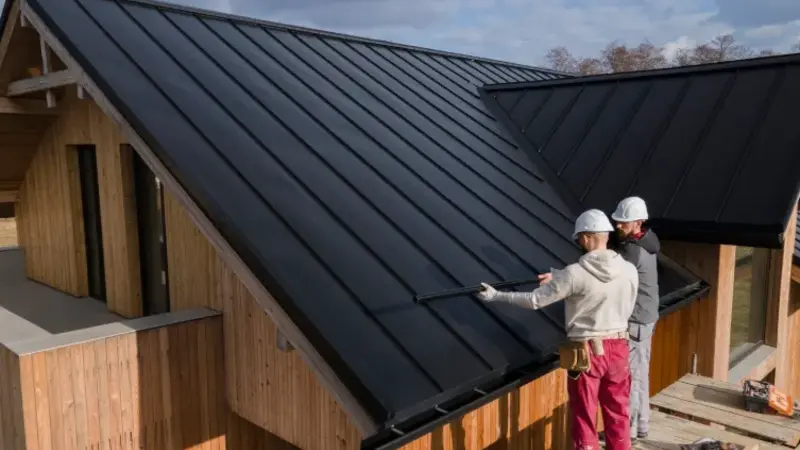
Roof terrace is an emerging trend in Fulham and Hammersmith with regard to the loft conversion. The loft provides you with the bedroom space or office space. Outdoor living space is also provided. Knowing what a loft conversion with roof terrace best means, or how planning regulations are applied in your locality in particular, can make you aware that this strategy is viable in your house. To explore the choices that can be used to design roof terraces in Fulham or Hammersmith, or to get to know the budgets that you should anticipate incurring when extending your loft with outdoor space. You will find out why such a mix is so popular among local residents in the neighborhoods of Fulham and Hammersmith. The loft conversion can be converted into a sky-terrace, so a room that was originally used only as an interior can be given a feeling of actual lifestyle use.
What a Loft Conversion Involving a Roof Terrace Entails?
A roof terrace loft conversion and a combination of two things. Drive-in loft interior space. Rooftop outdoor terrace.
The loft conversion aspect is normal. You insulate the roof. You provide and build support structure as required. You turn rooms that can provide habitable living places with openings.
Outdoor access is provided by the part of the roof terrace. Straight off the roof you construct a deck or a paving. You add railings for safety. You leave outdoor living space.
The combination of this one is that your loft is not simply a bedroom or office. It has access to the outdoors. That changes how you use it. Breakfast coffee at the terrace. Evening drinks. Space to breathe.
The relationship of interior and exterior affairs. There is a flow produced by a large door or bifold doors leading into the terrace. The spaces feel connected.
There must be railings and safety railings. You need safe access. You were in need of fall protection. The design must include safety without obstructing the view.
Drainage matters. A roof terrace should have its drainage installed correctly to avoid stagnation of water. This will be upfront planning engineering.
Terraced houses, as well as Victorian buildings, are widespread in Fulham and Hammersmith. The terrace that is to be added to these properties has to be designed well. You are dealing with period architecture. That has to be respected by the terrace.
Design of Roof Terraces in London (Fulham and Hammersmith Focus in Planning Rules)
Roof terraces are at faulty planning. Planning Permission normally takes place with the loft conversion. The terrace also has to be approved.
Residential terraces on roofs are questioned. There is the fear of being overrun by the neighbors. About noise. Regarding the visual contribution to the building.
During Fulham and Hammersmith in particular, the policies of Conservation Area govern numerous items. It can be an ideation of any sort like roof terrace, which alters the nature of the building.
There are roof terraces that are approved. However, they must be built in a calculated way. Avoided being overlooked by being screened where possible. Small size not to take up much space of the building. Complete building complementary materials.
Building Regulations is applicable to the terrace as such. Railings need to be safe. Structural support is supposed to perform. Drainage needs to function.
The glazed balustrade style is used. It gives security and avoidance of negligence. The neighbors are unable to view inside your property however you are able to see the view.
Hammersmith and Fulham in particular, consult Planning department prior to designing. There are various roads which are restricted in varying ways. There are roads that permit terraces easily. Some resist them.
Extension Architecture is conversant with Fulham and Hammersmith planning regulations. They have been involved in Planning committees in these locations. They know what gets approved.
Design Options: Balconies, Green Roofs & Terrace Layouts
Different approaches work for different properties.
Simple platform terrace – A basic deck at roof level. Railings for safety. Simple but effective. Increases outdoor space.
Screened terrace – Partial screens prevent overlooking. Lattice or slatted screens work. Maintains privacy. Still lets light through.
Glazed balustrade – Glass railings provide safety and transparency. You see the view. Neighbors don’t see in. Modern look. Premium option.
Green roof terrace – Planted areas combined with paving. Creates a garden feel. Better for environment. Requires structural support.
Tiered levels – Different levels on the terrace create interest. Planting areas. Seating areas. Maximizes small space.
Partial coverage – Some terrace covered, some open. Provides weather protection. Creates flexible outdoor space.
Container gardens – Planters with trees and plants create a garden feel. Less permanent than built-in planting. More flexible.
In Fulham and Hammersmith, Victorian properties often work well with traditional terrace designs. Modern materials but classical proportions. Respects the building’s character.
Expenses of Roof Terrace to Your Loft conversion
A loft conversion will become more expensive with a roof terrace. But it also adds value.
The simplest platform terrace could cost 8000 to 15000 extra to your project. Simple deck construction. Railings. Drainage.
Fully landscaped and screened terrace could be an addition of 15000-30000. More materials. More design complexity.
Green roof or a nice terrace would go up to 20000 to 40000 or even higher.
They are not enormous costs but they are major compared to the entire loft conversion price.
Loft conversion may only cost between 30000 and 50000. With the introduction of a terrace, it can be brought up to between 40000 and 70000. The terrace costs an extra 2540 percentage.
But what does it add in value? The loft containing a terrace is more precious as compared to the loft that contains none. You are, putting on the out-of-door living space. That will go in London where space is a luxury.
The resale value of property would normally rise 5 to 10 per cent with a good quality roof terrace. On a house with a value of 800000, that is 40000 to 80000 value added. The terrace value is used to recover the resale value.
On other than resale, daily living is more advantageous. You have outdoor space. That is important in the urban setting where you are residing within a narrow area.
Why London Homes Choose Roof Terrace Conversions for Extra Value?
London properties are expensive and compact. Outdoor space is rare and valuable. A roof terrace solves this problem.
In Fulham and Hammersmith specifically, many properties are terraced. You don’t have a big garden. A roof terrace creates outdoor space where none existed.
For rental properties, a roof terrace is a selling point. Tenants pay premium for outdoor space. The terrace helps justify higher rent.
For owner-occupied, the lifestyle benefit is huge. Morning coffee on your own terrace. Evening drinks. Space to think.
The neighborhood aspects matter too. Fulham and Hammersmith are desirable. Properties here are expensive. Adding features like roof terraces helps your property stand out.
Terraces also change how you use your loft. It’s not just a room. It’s a space with lifestyle qualities. That matters psychologically and financially.
Planning and Building Regulations Process
Getting a roof terrace approved takes time and professional guidance.
You need Planning Permission for the terrace in most cases. You need to submit detailed plans showing the terrace design, railings, screening, drainage.
The Planning committee in Fulham or Hammersmith reviews it. They consider impact on neighbors. They consider impact on the building’s character.
Building Regulations approval is also needed. The terrace structure needs to work. Railings need to be safe. Drainage needs to function. Waterproofing needs to work.
The whole process takes 3 to 4 months typically. Planning takes 8 to 12 weeks. Building Regulations takes parallel.
Extension Architecture handles this process. They know Planning committees in Fulham and Hammersmith. They design terraces that get approved.
Why Extension Architecture Recommends Roof Terraces?
A roof terrace transforms a loft conversion. It adds value. It adds lifestyle quality. It solves the outdoor space problem in London.
For Fulham and Hammersmith properties specifically, a roof terrace is often the right choice. It respects the neighborhood character while adding contemporary living space.
For your loft conversion project, consider whether a roof terrace works. Get professional design and planning advice specific to your Fulham or Hammersmith property.
Extension Architecture specializes in loft conversions with roof terraces in these areas. They understand local planning. They design terraces that get approved. They create spaces that add real value to your property.