One of the niche but great businesses to try out if you are a Canadian who enjoys working with personalised products, decorative items, and custom gifts is glass laser engraving. From engraved wine glasses and beer mugs to branded glassware and commemorative awards, there are many products that customers and businesses may be willing to pay for.
One reason this business is worth exploring is the demand for personalised items. People regularly look for unique gifts for weddings, birthdays, anniversaries, and other special occasions. Restaurants, breweries, event planners, and corporate clients may also need customised glassware featuring names, logos, or other designs. However, building a profitable glass engraving business requires more than purchasing a laser machine. You need to understand how glass responds to laser energy, choose suitable equipment, develop your engraving skills, and identify the customers most likely to purchase your products.
So, can you build a glass engraving business in Canada? Yes. Here is what you should know before getting started.
1. Understand How Laser Glass Engraving Works
Glass engraving involves creating visible markings or decorative patterns on a glass surface. Unlike wood or acrylic, glass does not absorb laser energy in the same way. When processed using a suitable CO2 laser, the surface can develop a frosted appearance as the laser creates microscopic fractures or changes in the surface structure. This makes laser engraving useful for producing:
- Personalised wine glasses
- Custom beer mugs
- Engraved drinking tumblers
- Decorative glass bottles
- Wedding and anniversary gifts
- Corporate awards and commemorative glassware
- Personalised jars and decorative containers
The finished result is generally a frosted or matte-looking design rather than a deeply carved inscription.
One important consideration is that glass is brittle. Excessive heat or unsuitable processing settings can cause cracking, chipping, or inconsistent results. Different glass types also respond differently. Standard glassware, borosilicate glass, coated glass, and crystal products may require different approaches. Always test samples before accepting large orders. You should also distinguish between engraving and cutting. A standard CO2 glass engraving setup is generally used for surface marking, not cutting glass into different shapes.
2. Choose the Right Laser Engraver for Glass
The machine you choose will determine which products you can manufacture and how efficiently you can handle customer orders. For many glass engraving applications, a CO2 laser engraver is a practical option. CO2 lasers are commonly used for processing non-metal materials, including glass, acrylic, wood, and certain other compatible surfaces. They can produce frosted markings on suitable glass products and are particularly useful for personalised drinkware and decorative applications. When comparing machines, consider the following:
- Laser power: A suitable power rating gives you flexibility when working with different products and engraving designs. However, glass processing requires careful control of energy, so higher wattage does not automatically mean better results.
- Working area: A larger working area allows you to accommodate different product sizes and arrange multiple flat items in one setup.
- Rotary compatibility: If you plan to engrave cylindrical products such as wine glasses, beer mugs, and bottles, a compatible rotary attachment is particularly important.
- Software compatibility: Look for software that allows you to prepare detailed designs, adjust engraving settings, and position artwork accurately.
- Cooling and ventilation: CO2 laser tubes require appropriate cooling, while engraving operations need suitable ventilation and extraction.
Which Laser Engraver Should You Consider?
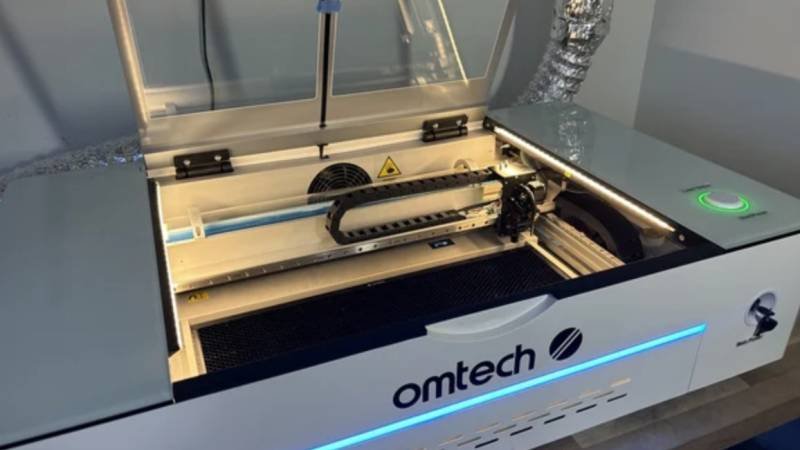
If you want to start a glass engraving business, the OMTech Polar CO2 Laser Engraver with Rotary Attachments is worth considering. The machine combines a 50W CO2 laser with a 20.1 × 11.8-inch working area, giving you room to work with flat glass products and other compatible materials.
One particularly useful feature is that the package includes two rotary axes. These attachments allow you to engrave cylindrical objects with diameters ranging from approximately 30 mm to 74 mm. This is important if you plan to offer personalised wine glasses, beer mugs, bottles, and other round products. Instead of limiting your business to flat glass surfaces, you can expand into customised drinkware and decorative cylindrical items.
The Polar also features a built-in water chiller and air assist, supporting the machine’s operating requirements. Its integrated camera helps position designs on the material, while compatibility with LightBurn and RDWorks provides flexibility when preparing artwork and controlling engraving jobs. With a maximum processing speed of 500 mm/s and a 50W CO2 laser tube, it offers a practical combination of features for small businesses and home-based creators exploring personalised products.
Of course, glass engraving requires careful testing. Different glass types and shapes respond differently to laser energy, so you should develop reliable settings before moving into larger production orders.
3. Identify the Most Profitable Glass Engraving Products
One of the best ways to approach a glass engraving business is to start with a few product categories and expand once you understand customer demand. Here are five potential product opportunities.
Personalised Wine Glasses
Wine glasses are among the most recognisable products in personalised glassware. Customers may order engraved glasses for weddings, anniversaries, birthdays, engagements, and other celebrations. You could offer individual glasses, matching pairs, or complete gift sets featuring names, dates, initials, and decorative designs.
Custom Beer Mugs and Drinking Glasses
Canada has a strong craft beer culture, creating opportunities to work with breweries, pubs, restaurants, and individual customers. Custom beer mugs and drinking glasses can feature business logos, event branding, personal names, or decorative artwork. You could also approach local breweries that want branded merchandise or customised glassware for special events.
Wedding and Event Glassware
Weddings and other celebrations provide opportunities for bulk orders. Event planners and couples may need personalised champagne glasses, decorative glass gifts, and commemorative items for guests. Instead of selling individual products, consider offering coordinated sets. For example, you could create matching glassware for the wedding party or personalised glasses for a complete guest list.
Corporate Gifts and Awards
Businesses regularly look for branded products to give to employees, customers, and business partners. Engraved glass awards, desk accessories, decorative glass plaques, and personalised drinkware can all serve this market. Corporate orders can also be attractive because customers may require multiple products featuring the same logo or message.
Personalised Bottles and Decorative Glassware
Another option is working with suitable glass bottles, jars, and decorative containers. These products can be customised for gift shops, specialty retailers, wedding suppliers, and small businesses. The main advantage is the variety of applications. You are not limited to conventional drinking glasses and can experiment with different shapes and designs.
4. Learn How to Engrave Glass Consistently
Glass engraving requires practice because the material can crack if exposed to excessive or uneven thermal stress. Before accepting customer orders, experiment with different glass samples and learn how your machine responds to different shapes and surface finishes. Some useful practices include:
- Begin with conservative settings and adjust gradually.
- Test different glass types before processing customer products.
- Keep the workpiece properly positioned and stable.
- Use suitable masking or surface-preparation methods where appropriate.
- Avoid excessive heat and repeated passes that may damage the glass.
- Clean finished products carefully and inspect them for defects.
Curved glass products require additional attention because the laser needs to maintain an appropriate focal distance across the engraving area.
This is where a rotary attachment becomes particularly useful. It rotates cylindrical objects during processing, helping the machine engrave designs around the surface.
Remember that not every glass product is suitable for laser engraving. Some tempered or specially treated glass products can be particularly prone to cracking, so check material compatibility before processing them.
5. Set Up Your Workspace and Calculate Your Costs
A glass engraving business does not necessarily require a large commercial workshop, but you need a suitable place to operate your equipment safely. Your workspace should accommodate the laser engraver, computer, materials, ventilation equipment, and packaging supplies. You should also consider:
- Electrical requirements
- Cooling arrangements
- Fume extraction
- Storage for different glass products
- Space for cleaning and inspecting finished items
- Packaging materials for fragile products
Glass products need careful handling, so packaging is particularly important. Protective inserts, suitable boxes, and reliable shipping arrangements help reduce the risk of breakage. When calculating your product prices, account for more than the cost of the blank glassware. Include engraving time, design preparation, packaging, shipping, consumables, equipment maintenance, and labour. You should also research the business requirements in your province or territory. Depending on your circumstances, these may include business registration, municipal permissions, insurance, and GST/HST obligations.
Which Laser Engraver Should You Consider?
If you want to start a glass engraving business, the OMTech Polar 50W Desktop CO2 Laser Engraver with Rotary Attachments is worth considering. The machine combines a 50W CO2 laser with a 20.1 × 11.8-inch working area, giving you room to work with flat glass products and other compatible materials.
One particularly useful feature is that the package includes two rotary axes. These attachments allow you to engrave cylindrical objects with diameters ranging from approximately 30 mm to 74 mm. This is important if you plan to offer personalised wine glasses, beer mugs, bottles, and other round products. Instead of limiting your business to flat glass surfaces, you can expand into customised drinkware and decorative cylindrical items.
The Polar also features a built-in water chiller and air assist, supporting the machine’s operating requirements. Its integrated camera helps position designs on the material, while compatibility with LightBurn and RDWorks provides flexibility when preparing artwork and controlling engraving jobs. With a maximum processing speed of 500 mm/s and a 50W CO2 laser tube, it offers a practical combination of features for small businesses and home-based creators exploring personalised products.
Of course, glass engraving requires careful testing. Different glass types and shapes respond differently to laser energy, so you should develop reliable settings before moving into larger production orders.
Final Thoughts: Is Glass Engraving Worth Exploring in Canada?
Glass engraving can provide a worthwhile opportunity for Canadian entrepreneurs who want to build a business around personalised gifts, custom drinkware, and branded products. The market offers several potential customer groups, including individuals celebrating special occasions, breweries, restaurants, wedding planners, gift retailers, and corporate clients.
The key is to develop a product range that meets a clear customer need while keeping production costs manageable. A suitable CO2 laser engraver, particularly one equipped with a rotary attachment, can help you work with different glass shapes and expand your product offerings. However, success also depends on material testing, consistent engraving quality, careful packaging, and effective marketing.
Start with a few products, develop sample designs, and test customer interest before investing heavily in inventory. With the right equipment and a well-planned approach, glass engraving can become an interesting specialised business opportunity in Canada. See more.